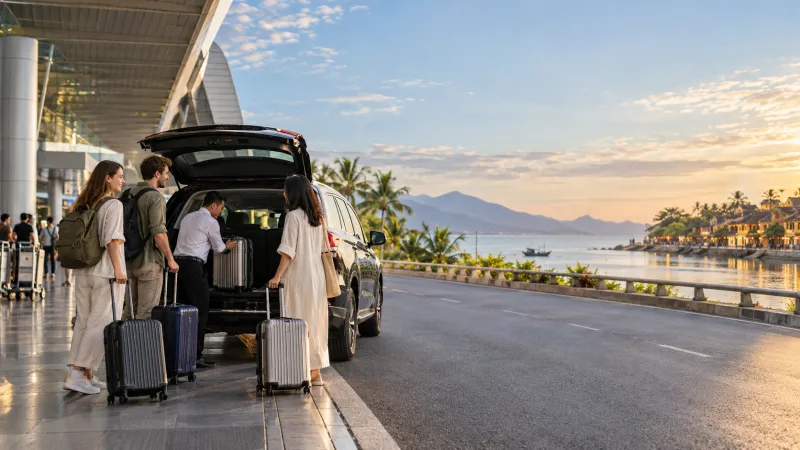


A “7-seat car” does not carry seven people with seven suitcases. The driver’s seat, the luggage space and the way bags stack all take room. The reliable way to choose is to count people and bags together, then pick the smallest vehicle that fits both with a little to spare.
Typical capacity of each class
These are the capacities shown on RideVie’s booking page at the time of writing. The page always displays the current figures for every class, so check it when you book.
| Vehicle | Passengers | Large bags |
|---|---|---|
| 4-seat car | up to 3 | 2 |
| 7-seat car | up to 5 | 4 |
| 9-seat car | up to 8 | 6 |
| 16-seat vehicle | up to 12 | 10 |
Choose by luggage first
- Count checked suitcases and large backpacks; cabin bags and handbags usually sit on laps or seats.
- If you are between two classes, take the larger one when you travel with children, a stroller or anything you cannot lay flat.
- A smaller vehicle is cheaper but a car that is too full is uncomfortable for the whole ride, especially on the 30 km to Hoi An.
Three quick examples
- A couple with two large suitcases: a 4-seat car is enough. Move up to a 7-seat if you also carry a stroller or sports equipment.
- A family of four with four suitcases: a 7-seat car holds the passengers and the bags with room to sit comfortably.
- Six friends with six suitcases: a 9-seat vehicle matches the numbers exactly, so with any bulky bag consider the 16-seat vehicle instead.
Oversized items and larger groups
Golf bags, surfboards, bicycles and musical instruments need to be confirmed in advance: write them in the notes of your request. For more than 12 passengers, or if one vehicle cannot hold everyone’s bags, contact RideVie and we will tell you what can be arranged, such as two vehicles on the same schedule.
Once you know your count, choose the class on the booking page; the fare for each class is shown side by side before you send the request.